Becoming — August 2026
I Let ChatGPT Plan My Outfits for a Week
I gave ChatGPT one week of my mornings — seven outfits, four kids, real life. Here's what it nailed, what it missed, and what I kept.
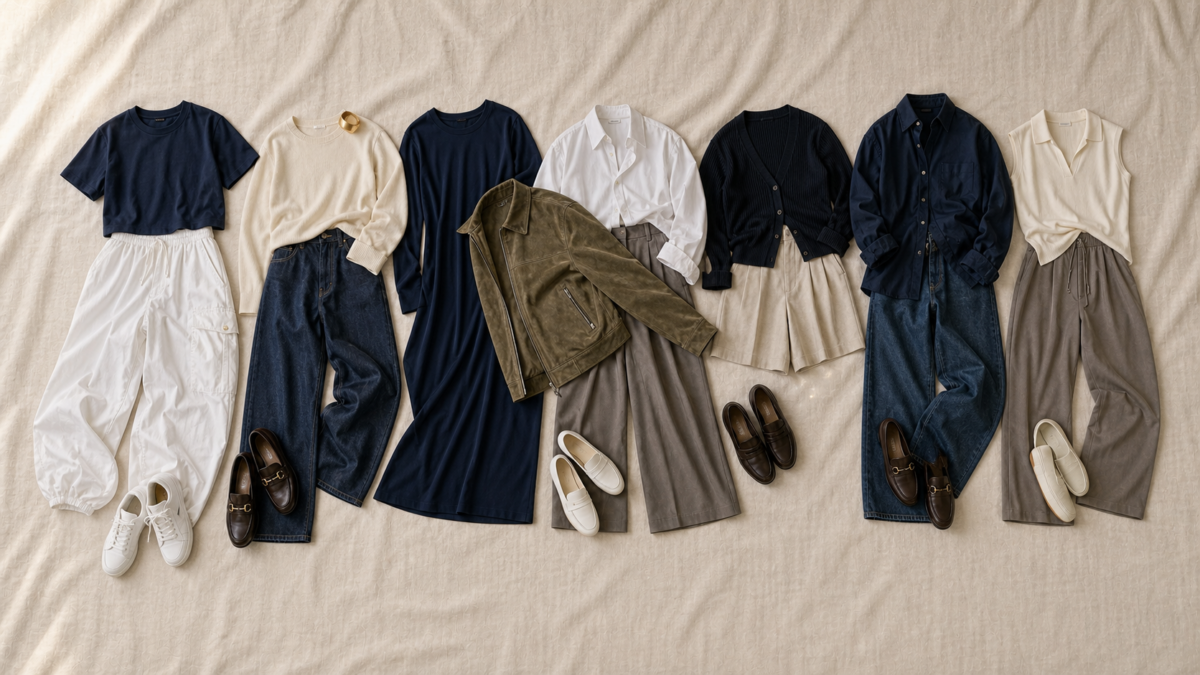
I gave ChatGPT one week of my mornings — seven outfits, four kids, real life. Here's what it nailed, what it missed, and what I kept.
Seven mornings, one machine, and the seventy-four minutes it gave me back.
Last Sunday night I was standing in my closet doing the thing I tell my daughters not to do — opening a negotiation I had no intention of closing. Pull out the linen pants. Hold them up. Put them back. Pull out the navy dress. Question its motives. Put it back. School starts in two weeks, the calendar is filling, and I could feel a season of forty-decision mornings coming for me.
I have spent twenty years getting dressed in public on this blog. I have spent this summer teaching ChatGPT to help. The obvious experiment was sitting right there: one week, every outfit, planned by the machine.
So I ran it the only way I know how to run anything — like a product experiment. One variable. Seven mornings. A metric I could count.
Sunday night I gave ChatGPT everything it needed in one message: the wardrobe list from the capsule wardrobe prompt that started all of this, my actual week — school errands, a coworking morning, a soccer sideline, one dinner out — and the Bay Area’s fake summer, which is 58 degrees at drop-off and 78 by pickup. One instruction: plan all seven days at once, and tell me why each outfit belongs to its day.
Then the rules for me, which mattered more:
Monday it sent me to Target in the white parachute pants, a boxy navy tee, and sneakers — “errand polish,” it called it, which is now permanently in my vocabulary. Tuesday it dressed me for the coffee shop like I might run into a former coworker, which is exactly the right level of paranoia for coworking in the Bay Area. Wednesday it put me on a soccer sideline in wide-leg denim, a cream fine-gauge knit, and loafers I second-guessed — and then defended to a machine that was not listening.
By Thursday something strange happened. I stopped auditioning clothes in the mirror. The decision had been made three days earlier by a version of me with more patience. All I had to do was execute.
Execution, it turns out, takes four minutes.
It never forgets what I own. I re-buy versions of things I already have; everyone does. The machine just calmly re-wears them. My cost per wear went down without a single purchase, which is the kind of math I usually have to commit a small shopping crime to achieve.
It has no moods. I dress worse when I am tired — flatter, safer, more apologetic. ChatGPT does not get tired. Wednesday-me got the same styling effort as Friday-me, and honestly, Wednesday-me needed it more.
It obeys the rules better than I do. Long over short. One structured piece per outfit. One point of contrast so the neutrals don’t flatline. I taught it those rules, and then it followed them with a consistency I have never once achieved myself. (Teaching your own taste to a machine and watching it out-discipline you is a specific kind of humbling.)
It doesn’t know where the laundry is. Day three it confidently prescribed the parachute pants, which were in the hamper, because a machine that has never done laundry for six people cannot conceive of the hamper. This is now my favorite fact about it. We renegotiated.
It can’t read a morning. Day five I woke up needing armor — the week had a meeting in it I wasn’t looking forward to, and the plan said soft: knit, sneakers, ease. I used my veto. The olive suede zip jacket from Zara, something with shoulders, the loafers that mean business. The machine planned the week I scheduled. It couldn’t know the day I’d actually have.
That’s not a flaw in the software. That’s the part of getting dressed that was never a logistics problem.
The experiment was never really about outfits. It was about where taste belongs. I used to spend mine in fifteen-minute increments every morning, re-deciding the same things — do these go together, is this too much, who am I today. Taste spent on repetition doesn’t compound. Taste spent on the system does. I spent one Sunday-night session teaching the machine my constraints, and it paid me back all week.
Total decision time across seven days: twenty-six minutes, and eleven of those were the veto. My old average was fifteen minutes a morning — call it a hundred a week. I got seventy-four minutes back and spent them, on at least one occasion, drinking coffee while it was still hot.
Saturday morning my 13-year-old wandered past my room and asked why I wasn’t standing in the closet anymore. I didn’t have a speech ready. I had a list on my phone and ten extra minutes. That felt like the whole result.
Give the machine your constraints, and keep the veto. Plan the week when you’re patient; override the day when you’re not the person the plan was made for. The machine plans. The human reads the morning. That split is the only version of AI styling I’ve kept — and I’ve kept it.
That’s the whole thing.
xo, Jenni
Twenty years in the making.
A space for the messy, beautiful middle.